Our Programs · Age three through twelfth grade
A classroom to belong to.
A world to discover.
At the MAC, each classroom is a community with its own work, relationships, and daily rhythms. Come inside Monet and Van Gogh, Matisse, O’Keeffe, and Dali to see where children learn, what they do, and how their teachers help them take on meaningful challenges.
Beyond the classroom, art, music, movement, language, and textiles give students more ways to express themselves. Afterschool clubs bring children, faculty, and families together around shared interests.
Visit Our ClassroomsAge three through kindergarten
Children’s House
Monet & Van Gogh
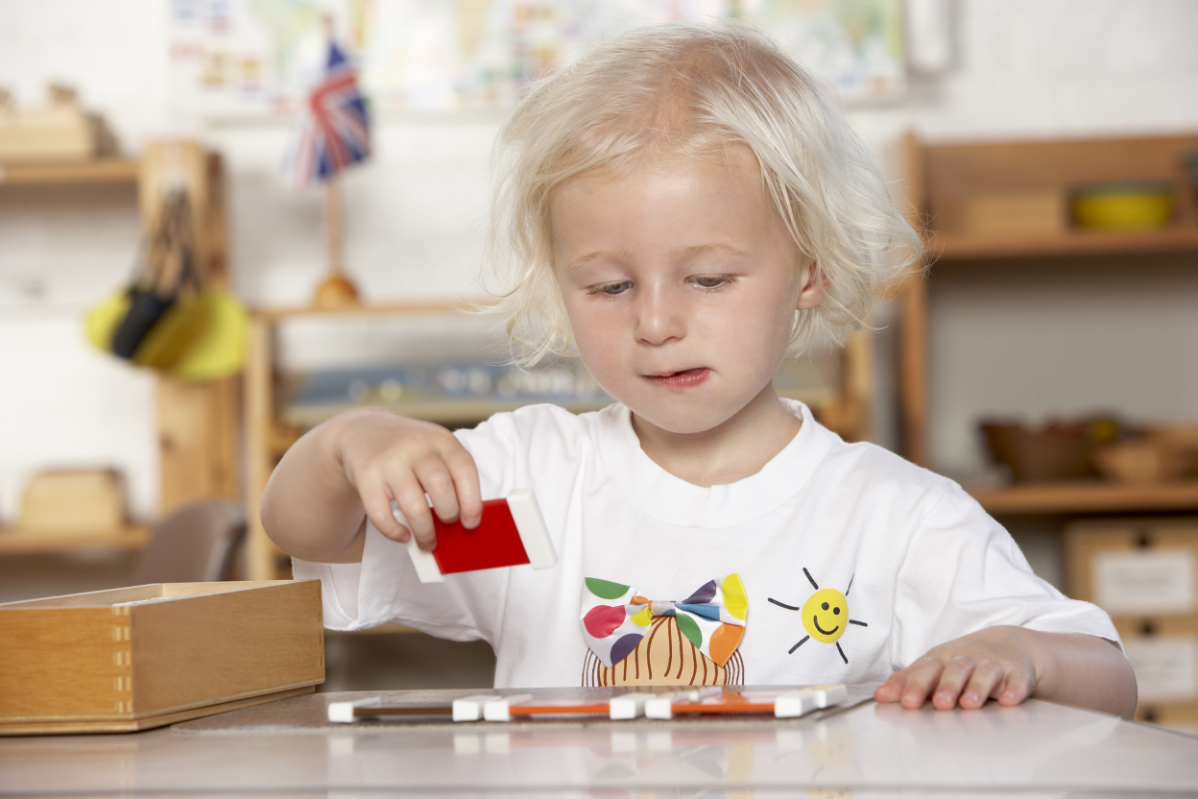
Monet and Van Gogh are our Children’s House classrooms: welcoming spaces where young children can reach the materials, choose work they have been shown, and begin to do things for themselves. A teacher’s careful introduction might lead to a child tracing a letter, comparing shapes, preparing a snack, or counting with beads. Each activity has a purpose, and each child has time to practice.
Teachers guide children individually and in small groups, helping them find an appropriate challenge and noticing when they are ready for more. Kindergarten children deepen their academic work and take on a visible role in the community, showing younger classmates how to use materials and care for the room. We offer a morning half-day option for pre-K, as well as full-day programs for pre-K and kindergarten.
Life in the classroom
Choosing an activity, carrying it carefully, asking for help, taking turns, and putting things away are part of the day. Children learn that their growing independence belongs alongside care for other people.
Mathematics
Children match numerals to quantities, explore place value, and use materials to investigate addition, subtraction, multiplication, and division as they are ready. Handling and arranging quantities helps them see what a calculation means before working only with written symbols.
Language & Reading
Sound games, letter work, and word building connect spoken language to print. Children develop vocabulary, pencil control, and sentence construction through guided practice. Teachers support emerging reading with lessons suited to each child’s readiness and growing understanding.
Practical Life, the Senses & the World
Pouring, fastening, preparing food, and caring for the room develop coordination and independence. Sensorial materials sharpen comparison and classification. Geography, nature, and cultural studies introduce children to living things, different places, and the people who share our world.
Grades 1–3 · Typically ages 6–9
Lower Elementary
Matisse
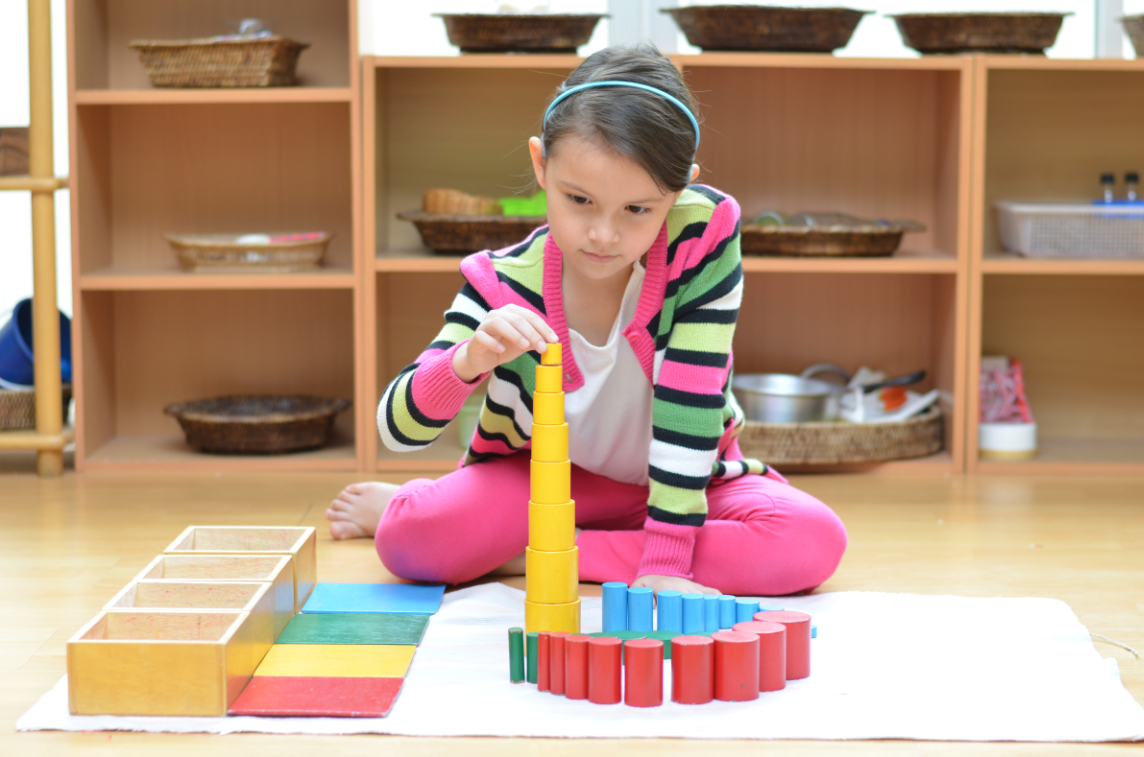
Matisse is a classroom full of questions. Stories about the universe, life, and human discovery invite students into a broad curriculum, while lessons and practice build the reading, writing, and mathematical skills they need to explore it. A question raised in a lesson can become a drawing, a written explanation, or a small research project shared with classmates.
Teachers give lessons, check understanding, and help students manage their work. Children have opportunities to work independently and with others, learning how to contribute an idea, listen carefully, and finish a shared task.
Life in the classroom
The social life of Matisse matters. Working with a partner means learning to explain, negotiate, and follow through. Classroom responsibilities give children daily practice in being useful members of their community.
Mathematics & Geometry
Place value and number operations develop alongside fractions, decimals, measurement, and telling time. Students investigate lines, angles, area, and volume using materials and written work. Teachers help them connect the model they can see with the calculation they can record and explain.
Reading, Writing & Language
Individual and small-group reading lessons support fluency and understanding. Spelling, grammar, and sentence analysis help children see how language works. Letters, poems, and reports give writing a purpose; students practice organizing information and communicating their ideas to an audience.
Science, Geography & History
The five Great Lessons introduce the universe, life, human beings, writing, and numbers. Investigations extend into plants, animals, the human body, weather, water, rocks, and matter. Maps and timelines connect places and events, while observations and experiments invite children to ask questions and record discoveries.
Grades 4–6 · Typically ages 9–12
Upper Elementary
O’Keeffe
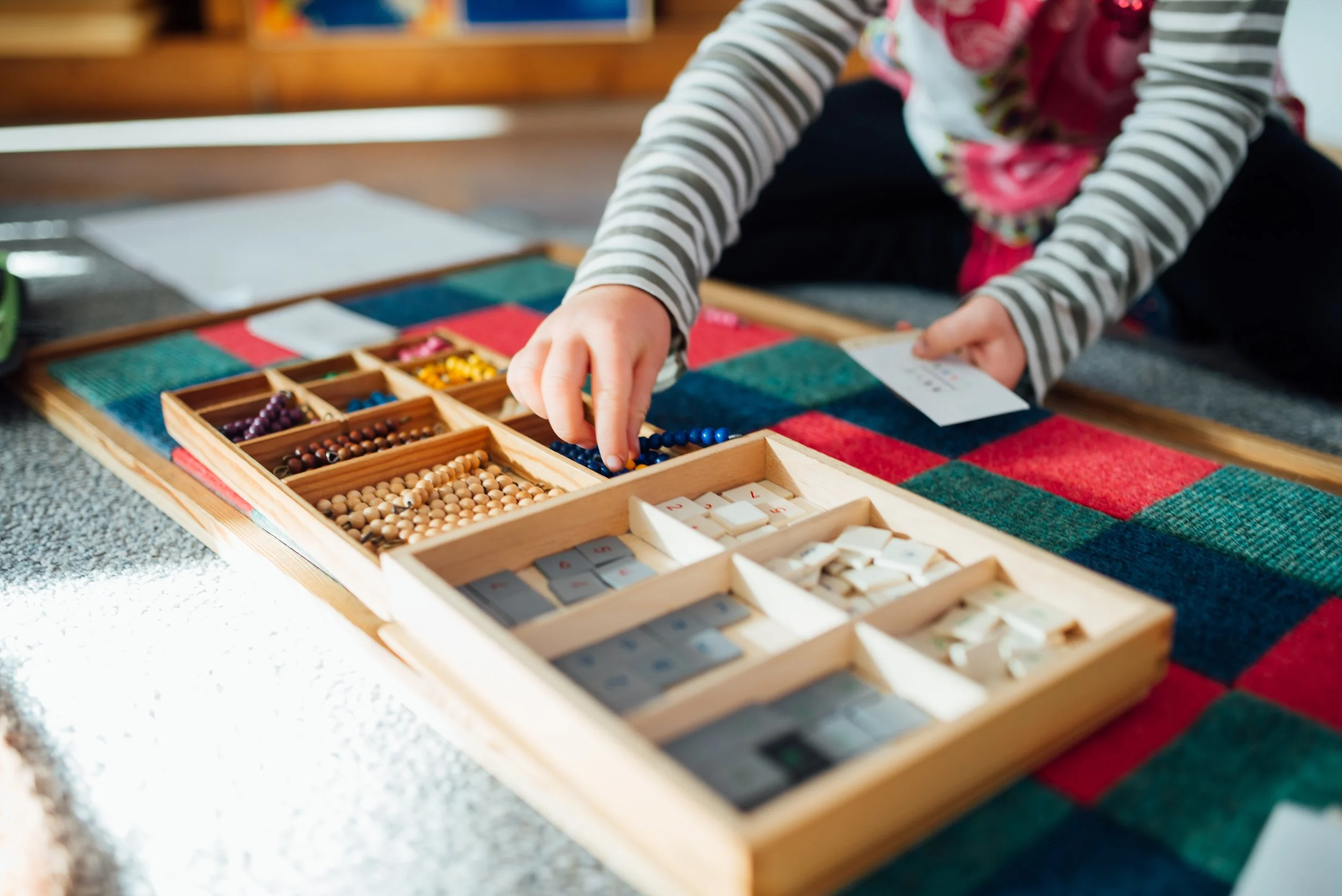
O’Keeffe gives students room to pursue substantial work. Research takes more planning, writing requires more revision, and mathematical explanations become more precise. Students are asked to look beyond a first answer: What supports it? How does it connect to something else? Can you explain it to another person?
Teachers help students set priorities, address gaps, and strengthen the quality of their work. Independent study and collaboration both have a place. Students learn to make a plan, respond to feedback, and take increasing responsibility for completing what they begin.
Life in the classroom
O’Keeffe students have ideas about how things should work. Discussions, shared projects, and community responsibilities give them opportunities to consider other perspectives and turn those ideas into thoughtful action.
Mathematics & Geometry
Students work with factors, multiples, fractions, decimals, and percentages, including applications such as interest and sales tax. Squares, cubes, and their roots introduce further mathematical relationships. Geometry explores angles, shape classification, perimeter, area, and volume. Students practice accurate calculation and explain the reasoning behind their solutions.
Literature, Writing & Research
Grammar and sentence analysis strengthen clear expression. Students practice taking notes, outlining, paraphrasing, and acknowledging sources in a bibliography. Narrative, persuasive, and explanatory writing develop alongside fiction and poetry. Revision asks students to examine their organization, evidence, word choices, and mechanics.
Science, History & Inquiry
Research and investigations connect scientific questions with geography and human history. Students organize findings, discuss interpretations, and communicate what they understand. Community projects and conversations about ethical questions extend that work into decisions about how people live together and care for the world.
Grades 7–12 · Adolescents
Erdkinder
Dali
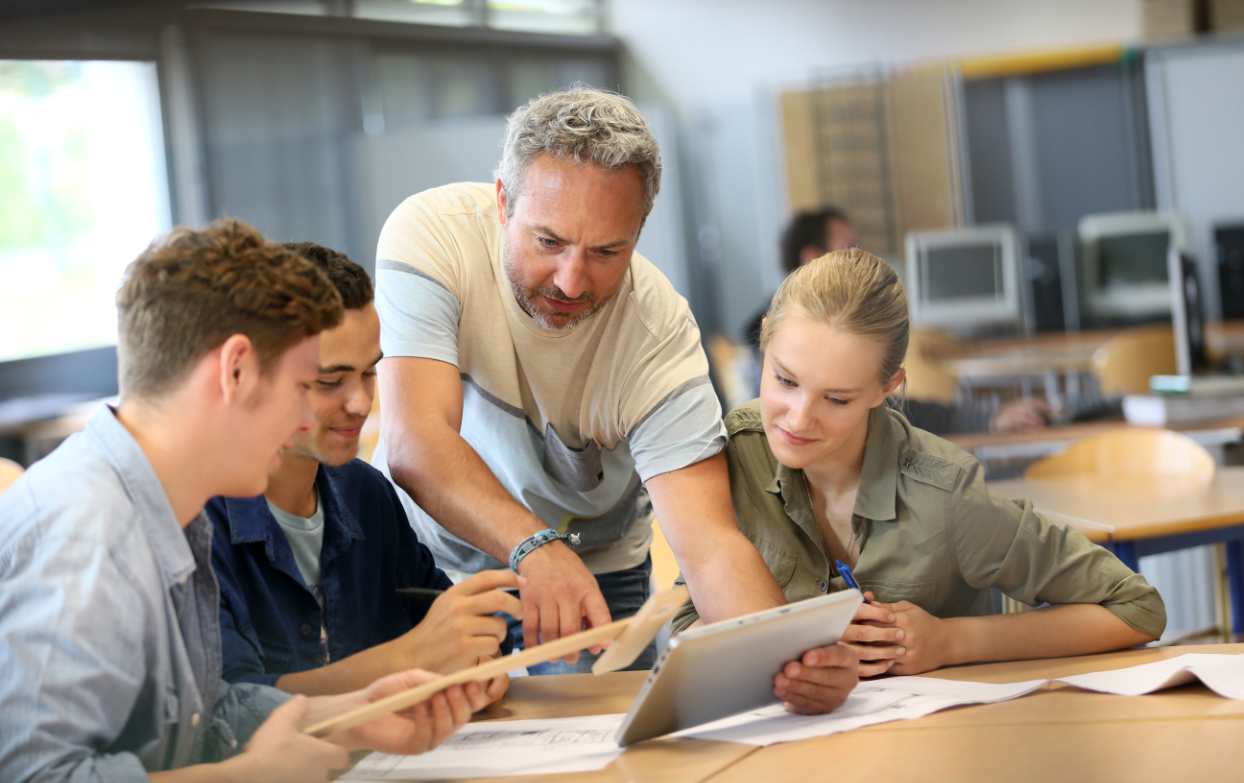
Dali is our adolescent community, where academic study meets the practical responsibilities of working and living with others. Students need meaningful challenges, trusted adults, and opportunities to make decisions that have consequences. The classroom provides a place to think seriously, contribute, and develop a stronger sense of who they are.
Teachers serve as instructors and mentors, helping students build subject knowledge, question assumptions, and take responsibility for their commitments. Across the middle and high school years, expectations deepen as students prepare for further education, work, and adult life.
Life in the classroom
Shared meals, community discussions, and collaborative work are part of Dali’s identity. Students practice balancing their own goals with the needs of a group—learning to lead, to listen, and to be counted on.
Academic Study & Communication
Mathematics, science, literature, writing, and the humanities provide the substance for serious study. Students practice explaining a solution, developing an argument, interpreting evidence, and presenting findings. Teachers guide both subject learning and the habits needed to sustain longer assignments and independent work.
Enterprise & Applied Learning
Student enterprise connects planning with practical results. Managing budgets, producing goods or services, and evaluating outcomes give academic skills a concrete purpose. Environmental and service projects also ask students to investigate needs, weigh options, work together, and take responsibility for what they undertake.
Community & Life Beyond School
Goal setting, project management, discussion, and reflection are part of preparing for further education and work. Students practice meeting commitments, resolving differences, and contributing to a community. Across the middle and high school years, teachers help them develop the independence and judgment these responsibilities require.
During-School Specials
More ways to discover what you can do.
Our specials make room for kinds of learning that deserve time and attention of their own. Students work with different materials, move their bodies, listen closely, and find new ways to communicate. Teachers help them develop technique, practice with purpose, and take pride in what they can do.
Art
Drawing, painting, and making invite students to observe carefully and make deliberate choices. Exploring artists, materials, and techniques gives them a growing visual vocabulary for expressing their own ideas.
Music
Optional piano and violin lessons bring instrumental music into the school day. Students develop technique, attentive listening, and musical expression while experiencing the progress that comes with practice.
Physical Education
Movement, games, and physical challenges build coordination, fitness, and confidence. Students practice cooperation, fair play, and perseverance while discovering the enjoyment of being active.
Spanish
Learning Spanish introduces another way to communicate and another window into culture. Vocabulary, conversation, and repeated practice help students connect words with meaning and grow more comfortable using the language.
Textiles
Working with fabric, thread, and fiber brings design and practical skill together. Students practice careful handwork, follow a sequence, solve problems, and experience the satisfaction of making something they can use or share.
Afterschool Clubs
Stay curious after the school day.
A shared interest can be the beginning of a new friendship or a skill a child never expected to enjoy. Our clubs bring the interests and experience of faculty, families, and community partners into school life—from building a robot to rehearsing a scene or preparing food together.
Sign Language Club
Grades 1 and up
Explore a visual way to communicate and practice a new language together.
Art Club
Grades 3 and up
Spend more time developing ideas, exploring materials, and making art.
Running & Outdoor Fun & Games Club
All grades
Get moving, enjoy outdoor games, and share an active afternoon with friends.
Chess & Board Game Club
All grades
Think ahead, consider a strategy, and enjoy the challenge of playing together.
Competitive Robotics Team
Grades 4 and up
Build, program, test, and improve as part of a team working toward competition.
MAC Newspaper Club
Grades 1 and up
Find stories, share school news, and help give the MAC community a student voice.
Mechanics Lab
Grades 1 and up
Investigate how things work through practical exploration and problem-solving.
One-Act Plays Club
Grades 1 and up; students must be able to read
Bring a script to life through rehearsal, character, and collaboration.
Improv Club
Kindergarten and up
Practice thinking on your feet, listening to others, and creating a scene together.
Yoga Class
Pre-K and kindergarten
Explore movement, balance, and body awareness in a class for our youngest students.
Plant-Based Cooking Club
Grades 1 and up
Prepare food together, practice kitchen skills, and discover new ingredients and flavors.
Come see Montessori at work.
Visit our classrooms, meet our teachers, and ask questions. Discover how a Montessori education at the MAC could support your child’s growth.
Schedule a Tour