The Montessori Approach
An education for the whole person. From pre-K through twelfth grade.
Montessori education gives children an active role in their learning, with thoughtful guidance from teachers and a classroom designed for their stage of development.
Children investigate ideas, practice skills, and learn to care for their work and their community. Academic learning grows alongside independence, curiosity, and responsibility.
Explore the Approach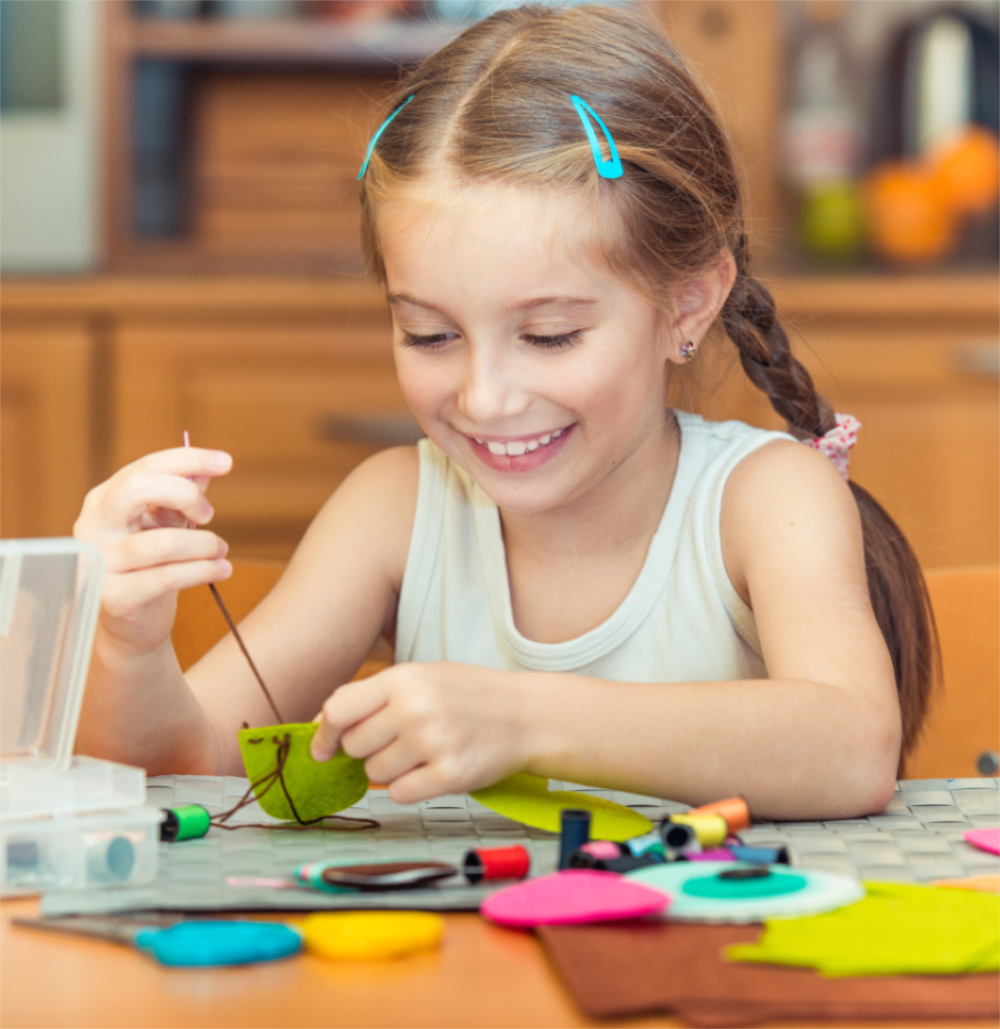
An education that grows with the child.
A three-year-old learning to pour without spilling and a teenager planning a research project are doing very different work. Yet both are learning to pay attention, make decisions, notice mistakes, and follow through. Montessori builds these capabilities over time, alongside increasingly demanding academic study.
Developed by Dr. Maria Montessori, the approach brings together a connected curriculum, purposeful materials, mixed-age classrooms, and teachers who guide each student’s progress. Lessons introduce new ideas; sustained practice and exploration turn those ideas into understanding. Children gain greater freedom as they learn to use it responsibly.
At the MAC, this journey extends from pre-K through twelfth grade. Each stage responds to the person the child is becoming and prepares them for the next.
01 / Pre-K–Kindergarten
“I can do it.”
A child enters a classroom arranged to make participation possible: materials within reach, a place for each activity, and a teacher ready to show how something works. A lesson might involve pouring water, tracing a letter, or matching a number with a quantity. These experiences ask the child to look carefully, coordinate movement, and complete a sequence.
The teacher demonstrates, then gives the child time to try. Repetition has a purpose. With each attempt, movements become more controlled and attention more sustained. When a material helps reveal a mistake, the child can begin to correct it. Confidence grows from real accomplishment.
Academic foundations develop through this active engagement. Sound games, letter–sound relationships, and word building prepare the way for reading and writing. Counting and concrete quantities give meaning to mathematical symbols. Observation of plants, animals, colors, and shapes develops vocabulary and habits of careful comparison.
Independence also means being part of a group. Children practice asking for help, waiting, caring for shared materials, and respecting someone else’s concentration. Teachers set clear limits and help children navigate disagreements. Older classmates offer examples of what is possible; younger children gradually become capable helpers themselves.
What carries forward: concentration, early literacy and number sense, care for others, and the confidence to begin.
02 / Grades 1–3
“I want to know why.”
As children enter elementary school, their questions reach beyond what is immediately in front of them. They want to understand how the world works and where they belong in it. Montessori meets that expanding imagination with stories, demonstrations, and lessons that open paths into science, history, geography, language, and mathematics.
Curiosity becomes a reason to read, calculate, and investigate. A question about a plant can lead to observation, new vocabulary, measurement, and a written explanation. These connections give purpose to academic skills while teachers continue to teach those skills directly.
In mathematics, materials make place value and operations visible before students rely on written procedures alone. Reading grows in fluency and comprehension; writing develops through attention to sentences, spelling, grammar, and expression. Children learn that an answer can be checked and an explanation can be improved.
The teacher follows each child’s understanding, offers lessons, and helps identify useful next steps. Students have choices within that framework. They also learn to work with others: sharing an idea, listening to another explanation, and contributing to a task. Explaining a discovery to a classmate becomes another way to strengthen their own understanding.
What carries forward: stronger academic tools, a questioning mind, and the ability to learn with other people.
03 / Grades 4–6
“I can work it out.”
With stronger foundations, students can pursue questions for longer and take more responsibility for how they answer them. Research involves finding information, deciding what is relevant, organizing ideas, and communicating a conclusion. A project calls for both imagination and follow-through.
The work becomes more abstract and more demanding. Fractions, decimals, geometry, and numerical relationships invite students to connect procedures with reasoning. In language, students read for meaning, build arguments, and revise writing. Science asks them to compare observations and consider evidence. History and geography introduce different perspectives and connections across time and place.
Teachers continue to present lessons and examine student work. When understanding is incomplete, they provide explanation and practice; when a student is ready, they extend the challenge. A child’s pace can vary across subjects. Individual attention makes it possible to address a gap without treating that gap as a limit on the whole child.
Social expectations grow as well. A shared project requires students to divide work fairly, make decisions, and respond when something does not go as planned. They practice accepting feedback, resolving disagreements, and taking responsibility for the quality of what they contribute.
What carries forward: reasoning, research, organization, and a growing ability to evaluate one’s own work.
04 / Grades 7–12
“My work has purpose.”
Adolescents need to understand how their learning connects to life beyond school. They are developing their own perspectives and asking what they can contribute. Montessori carries academic study into that search for purpose, combining intellectual challenge with meaningful responsibility.
Academic depth and application grow together. Mathematical study develops abstract reasoning and the ability to model problems. Reading and writing require interpretation, evidence, and a clear argument. Scientific investigation asks students to test ideas and account for results. History and the humanities invite them to examine human choices, competing perspectives, and consequences.
At the MAC, enterprise and community work accompany academic study. Planning a venture, managing a budget, or contributing to a shared undertaking gives practical weight to accuracy, communication, and collaboration. Students experience how their preparation affects other people and how knowledge can help solve a real problem.
Teachers remain essential as instructors and mentors. They challenge assumptions, provide feedback, and help students take increasing ownership of complex work. Across the secondary years, the aim is greater independence in planning, sustained study, discussion, and judgment—preparation for further education and participation in adult life.
What carries forward: knowledge that can be applied, the ability to manage demanding work, and responsibility to a wider community.
Ready to keep learning. Ready to contribute.
The independence that begins in a child’s first classroom grows into the ability to tackle demanding work. Reading becomes research and interpretation. Mathematics develops into abstract reasoning and problem-solving. Scientific curiosity becomes investigation, evidence, and explanation. Montessori’s academic rigor lies in understanding ideas deeply, practicing skills, and applying knowledge with increasing confidence.
Freedom comes with expectations. Teachers provide instruction, assess understanding through observation, discussion, and student work, and use feedback to guide progress. Assessment goes beyond a grade to reveal what a student understands and what needs attention. As students mature, responsibility expands to planning longer assignments, meeting deadlines, and preparing independently—whether the work happens in the classroom or at home.
These experiences build habits that matter in college, careers, and entrepreneurship: managing time, evaluating information, communicating clearly, and following through. Students learn to develop an idea, question their assumptions, respond to setbacks, and contribute to a shared undertaking. Our aim is for graduates to become capable learners and responsible citizens who can think independently while listening to and working with others.
Everything matters. The challenge of a lesson, the guidance of a teacher, the opportunity to try again, and the partnership between school and home all shape that preparation. Together, they help children develop the knowledge, confidence, and judgment to keep learning—and to make a meaningful contribution wherever life takes them.
Explore Our Programs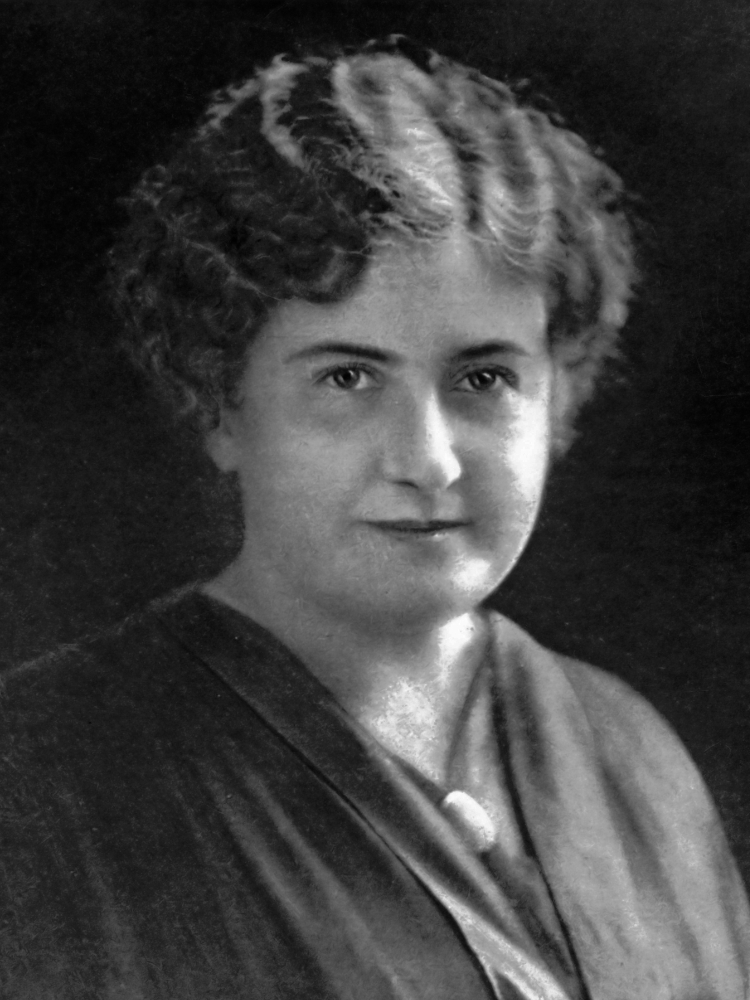
The Person Behind the Approach
Dr. Maria Montessori · 1870–1952
Dr. Maria Montessori was a pioneering physician, scientist, and educator whose work challenged the world to see children differently. In 1896, she became one of Italy’s first women physicians, overcoming barriers that had long excluded women from medicine. Her work with children with disabilities helped reveal the possibilities that thoughtful teaching and a carefully prepared environment could unlock.
When she opened the first Casa dei Bambini in Rome in 1907, Montessori brought a scientist’s observation and a physician’s care to the classroom. She recognized children’s capacity for deep concentration, independent activity, and meaningful learning when given the right conditions. Her work challenged established assumptions about childhood and placed respect for the child at the center of education.
Montessori devoted her life to developing this approach, educating teachers, and sharing her discoveries across countries and cultures. With her son Mario, she founded Association Montessori Internationale in 1929 to carry the work forward. Her vision extended beyond academic achievement to human dignity, responsibility, and peace, earning her three Nobel Peace Prize nominations. More than a century after her first classroom opened, her ideas continue to shape education around the world.
Her educational legacy reaches into technology, business, the arts, and sports. Former Montessori students include Google co-founders Larry Page and Sergey Brin, Amazon founder Jeff Bezos, acclaimed violinist Joshua Bell, and basketball champion Stephen Curry. These varied paths reflect the breadth of a vision that invites children to develop their capabilities, pursue their interests, and contribute to the world.
Explore her life and work at Association Montessori InternationaleCome see Montessori at work.
Visit our classrooms, meet our teachers, and ask questions. Discover how a Montessori education at the MAC could support your child’s growth.
Schedule a Tour